
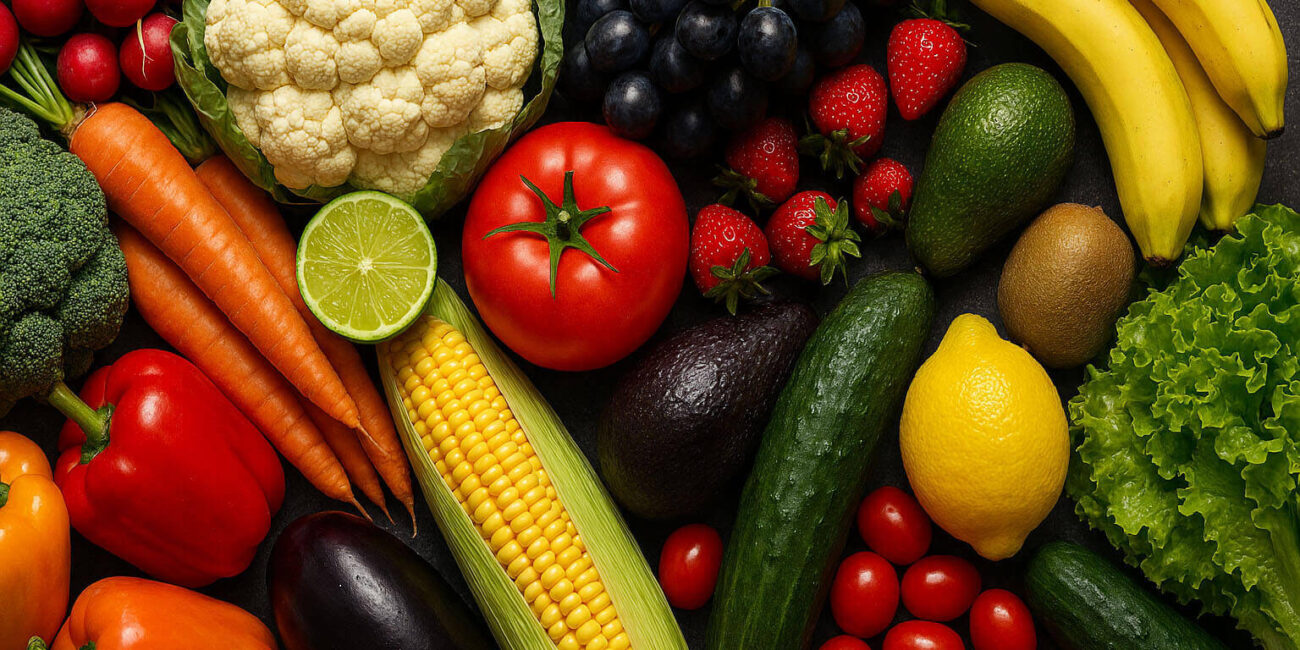
Vegetables aren’t just “healthy” — they’re essential for clearing acne. If you’ve made it this far in the program, you’ve already removed triggers and started healing your gut. Now it’s time to flood your body with the nutrients that actively repair, calm, and protect your skin. Vegetables deliver prebiotic fibers that feed your good gut bacteria, phytonutrients that reduce inflammation, and polyphenols that act like natural anti-inflammatories — compounds you simply can’t get from supplements or processed foods. Many people believe they eat plenty of vegetables—until they take a closer look at what they’re actually eating. In reality, most people consume far fewer vegetables than they realize. That’s why this step isn’t about simply adding a side salad. It’s about making vegetables the foundation of every meal.
Eat 4 Servings of Dark Green Vegetables Daily
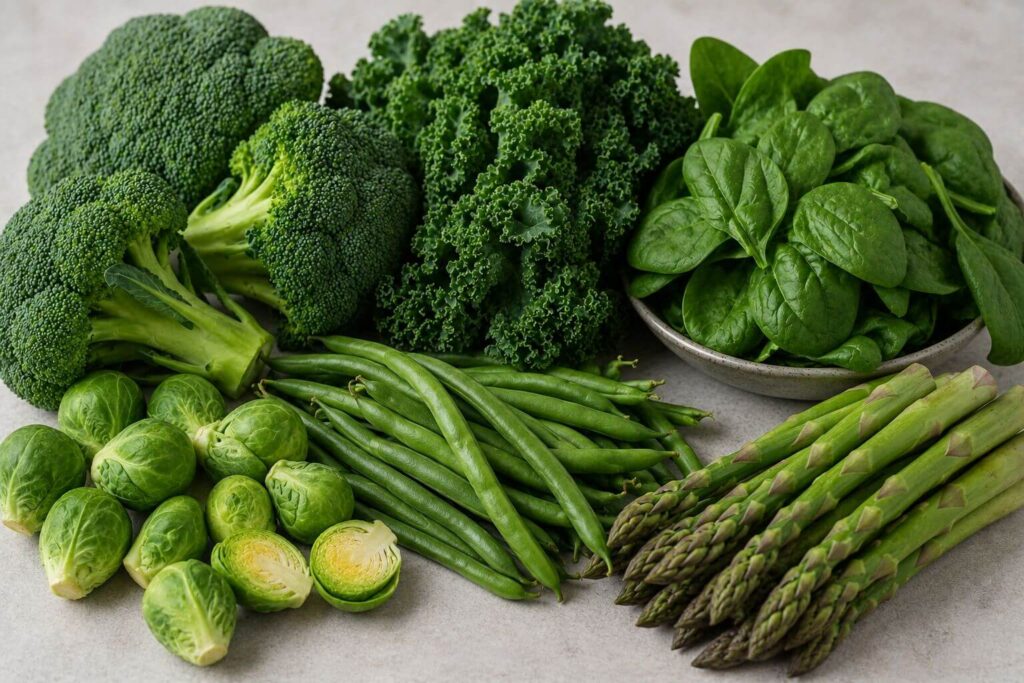
Dark green vegetables — like spinach, kale, collards, arugula, brussel sprouts, broccoli, green beans, asparagus, bok choy, and Swiss chard — are nutritional powerhouses for acne-prone skin. They’re packed with chlorophyll, vitamin A, vitamin C, and magnesium — all of which support skin cell turnover, reduce redness, and calm inflammation. Aim for 4 servings per day (1 serving = 1 cup raw or ½ cup cooked). Add them to smoothies, stir-fries, soups, or simply sauté with garlic and lemon. Don’t skip them — these greens are your skin’s daily detox crew.
When it comes to achieving clear skin naturally, vegetables aren’t just side dishes—they’re some of the most powerful foods you can put on your plate to support healthy, acne-resistant skin.
Eat 4–8 Servings of Other Vegetables Daily
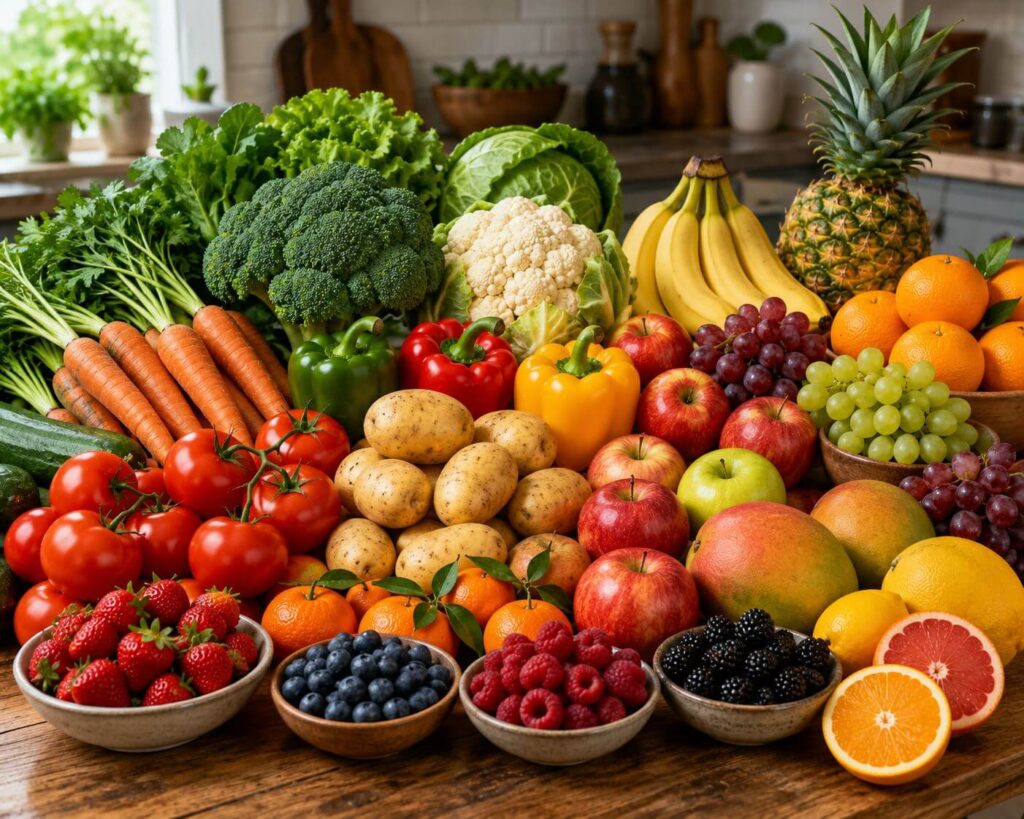
Beyond greens, you need a wide variety of colorful vegetables to cover all the anti-inflammatory, antioxidant, and gut-healing bases. Think carrots, bell peppers, broccoli, cauliflower, zucchini, mushrooms, beets, sweet potatoes, and asparagus. Each color brings different phytonutrients — red for lycopene, orange for beta-carotene, purple for anthocyanins — all of which fight acne from the inside out. Aim for 4–8 total servings per day (1 serving = 1 cup raw or ½ cup cooked). The more variety, the better. Rotate your veggies weekly to keep your gut microbiome diverse and your skin glowing.
Eat the rainbow, calm the inflammation, and let your skin reap the benefits.
How to Cook Vegetables So You Actually Enjoy Them (and Eat Them Every Meal)
Knowing that vegetables are good for your skin is one thing—actually eating enough of them every day is another. Fortunately, healthy eating doesn’t have to mean forcing yourself to eat plain salads or bland steamed broccoli.
The key is to find preparation methods that you genuinely enjoy. When vegetables taste good, they become something you look forward to eating rather than something you feel obligated to consume.
One simple approach is to add vegetables to meals you already love. Spinach can be blended into smoothies, mushrooms and bell peppers can be added to pasta dishes, and shredded carrots or zucchini can be mixed into soups and stews. Small additions can quickly add up and make it easier to increase your daily intake without completely changing your diet.
Stir-fries are one of the easiest and most delicious ways to eat more vegetables. Combine a variety of colorful vegetables with potatoes, rice, or noodles to create satisfying meals that don’t feel restrictive. Adding beans, lentils, tofu, or other proteins can make the meal even more filling. Season with garlic, herbs, spices, or a splash of soy sauce to enhance the flavor. You don’t need complicated recipes—simple meals are often the most sustainable.
Roasting vegetables is another excellent way to enhance their natural flavor. Broccoli, cauliflower, Brussels sprouts, carrots, and sweet potatoes develop a delicious sweetness and satisfying texture when roasted. Seasoning them with some soy sauce, garlic salt, herbs, spices can make them even more enjoyable.
Don’t wait until the end of the day to eat all your vegetables. Instead, aim to include a few servings with each meal. Spreading your intake throughout the day makes it much easier to reach your goals and helps make vegetables a normal part of your eating pattern rather than an afterthought.
Healthy snacks can also help increase your vegetable intake. Raw, crunchy vegetables such as carrots, snap peas, cucumber slices, bell peppers, broccoli florets, and celery make convenient snacks that can be enjoyed throughout the day. Keeping washed and pre-cut vegetables in the refrigerator makes it easier to reach for them when hunger strikes.
Don’t underestimate frozen vegetables, either. Frozen broccoli, peas, green beans, mixed vegetables, and spinach are convenient, affordable, and often just as nutritious as fresh produce. Keeping a few bags in the freezer ensures you always have healthy options available, even on busy days.
Remember, you don’t need to eat perfectly to benefit from a more plant-rich diet. The goal isn’t to force yourself to eat foods you dislike, but to discover enjoyable ways to incorporate more vegetables into your daily routine. Small changes practiced consistently can add up over time and help create an eating pattern that supports both clearer skin and better overall health.






No Comment! Be the first one.